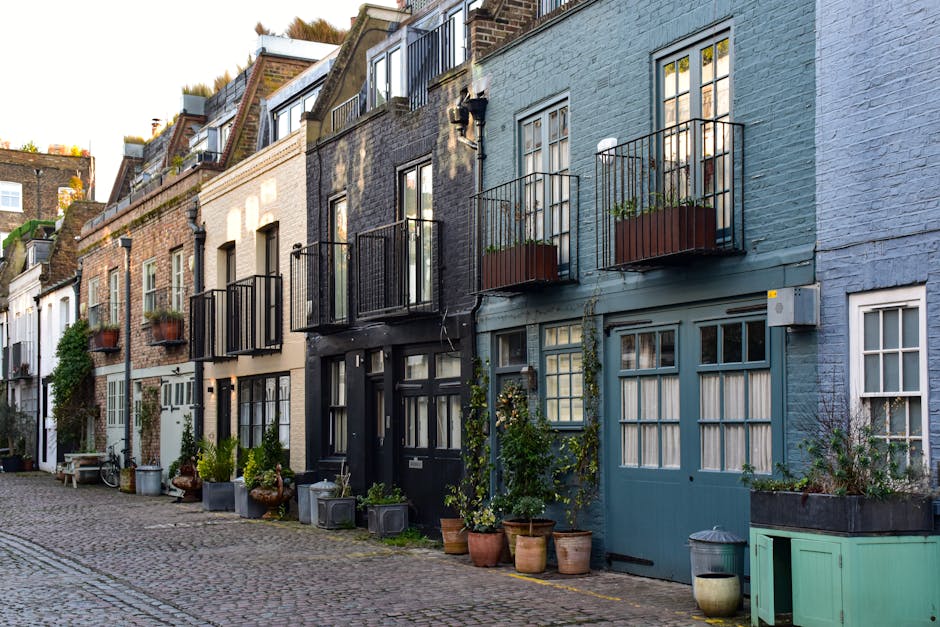
South Wimbledon removals tips for narrow terraces

If you are moving out of a narrow terrace in South Wimbledon, you already know the property type can make a normal removal day feel a bit fiddly. Tight hallways, steep stairs, awkward corners, limited parking, and neighbours who quite reasonably want their street left clear can all add pressure. The good news is that a cramped layout does not have to turn moving day into chaos. With the right planning, smart packing, and a few small decisions made early, a narrow-terrace move can be calm, efficient, and surprisingly manageable.
This guide gives you practical South Wimbledon removals tips for narrow terraces, from access checks and parking strategy to what to move first, what to store, and how to avoid the classic mistakes that slow everything down. It is written for real homes, real stairs, and real life. Let's make the process a lot less awkward.
Why South Wimbledon removals tips for narrow terraces matters
Narrow terraces often look manageable from the outside, but the challenge is usually inside the building and just outside it. A sofa might technically fit through the front door, yet catch on a banister. A mattress can be easy to carry but awkward to turn on a landing. A fridge may be fine on paper and still be a pain if the path from kitchen to van involves a tight turn, a low ceiling, and a narrow pavement. You get the idea.
In South Wimbledon, many streets have that classic London mix of compact frontages, limited off-street space, and busy road conditions. That combination means removals need more than muscle. They need sequencing, timing, and a realistic view of what can be done in one go. If you plan properly, you reduce the risk of damage, save time, and avoid the "we'll just squeeze it" mentality that tends to end in scratched walls or tired backs.
There is also a wellbeing angle. Moving day is already emotionally noisy. If you are living among boxes, trying to keep a path clear, and worrying whether the van can stop outside, the stress adds up fast. A good plan lowers that load. And honestly, that can make the whole experience feel more human and less like a battle with your own hallway.
If you want extra support for the broader move, it can help to look at local removals and house removals options that are set up for London-style access challenges. For smaller, awkward loads, small removals can be a better fit than overbooking a larger vehicle.
How South Wimbledon removals tips for narrow terraces works
The basic idea is simple: remove friction before removal day. In practical terms, that means understanding the property layout, the street access, and the size of each item before anyone starts carrying boxes downstairs. It also means breaking the move into smaller, easier stages rather than trying to clear everything in one frantic push.
A narrow terrace move usually works best in this order:
- Check access from room to front door and from front door to van.
- Measure large items and note awkward turns, stairs, or low ceilings.
- Decide which items need disassembly.
- Pack and label by room, not by random box stacking.
- Move fragile or valuable items separately.
- Load the heaviest items first, then fill with lighter boxes and soft items.
- Keep the route clear so nobody is dodging around laundry baskets and half-open drawers.
That sounds basic, but in tight homes the basics are everything. A move becomes easier when every object has a place before it is lifted. And if you are dealing with a smaller property, combining careful planning with a service such as man and van can be a sensible middle ground between doing it all yourself and booking a full-scale team you may not need.
There is also a storage element for many terrace moves. If the new home is not ready, or you are trying to avoid cramming furniture into a narrow staircase, short-term storage or mobile self storage can make the transition far smoother. Truth be told, a little temporary breathing room often saves more time than it costs.
Key benefits and practical advantages
A well-planned move from a narrow terrace is not just about surviving the day. It improves the quality of the move itself. Here are the real-world benefits people notice most.
- Less damage: careful item planning reduces knocks to paintwork, doors, banisters, and furniture.
- Faster loading: when boxes are packed and grouped properly, the van is loaded in a cleaner sequence.
- Better use of space: narrow properties reward compact packing and disciplined sorting.
- Lower stress: fewer last-minute surprises means fewer panicked phone calls and fewer "where did the kettle go?" moments.
- Safer lifting: when bulky items are broken down or moved with the right equipment, the risk of injury is lower.
- Cleaner handover: if you are selling or renting, a more organised exit can help you leave the property in better shape.
One easy win is to store surplus furniture rather than forcing it through a staircase that was clearly designed by someone with a grudge against wardrobes. For that sort of situation, furniture storage and secure storage are useful options, especially if you are staging a home, downsizing, or waiting for completion dates to line up.
A second benefit is flexibility. Narrow terraces often mean the move is not fully linear. You may need to remove one batch on Friday, clean on Saturday, and finish on Monday. That is where removals and storage can keep the process from becoming a pile-up. It is a practical bridge, not a luxury.
Who this is for and when it makes sense
This approach makes sense for a wide range of people, not just those in traditional terraced houses. If your property has narrow stairs, tight access, a small front path, or limited parking nearby, you will benefit from treating the move like a logistics problem, not just a lifting job.
It is especially useful if you are:
- moving out of a Victorian or Edwardian terrace with narrow internal stairs;
- living on a street where the van may need to park a short walk away;
- moving with children, pets, or a partner who is trying to keep the place functional until the last minute;
- downsizing and need to sort what stays, what goes, and what waits in storage;
- between rentals and need temporary space for furniture or boxes;
- relocating a flat above or behind a terrace property with awkward access;
- moving a small home office or work-from-home setup without losing key items.
If that sounds familiar, the most useful next step is usually to choose the move type that fits your scale. For compact homes and smaller loads, small removals can be enough. For a more complete house move, flat removals or house removals may be a better match.
A quick note for students and sharers: you may not need the same setup as a family house move. If you are balancing term dates, rentals, and limited cupboard space, student storage is worth considering. It keeps the move lighter. And lighter usually means saner.
Step-by-step guidance
Here is a practical way to handle a narrow terrace move without overcomplicating it.
1. Measure the difficult points first
Do not start with the sofa. Start with the bottlenecks. Measure door widths, staircase turns, landing corners, and any tight hallway bends. If your biggest item will only fit at a diagonal, note that before removal day. A simple tape measure can save a lot of drama.
2. Decide what needs disassembly
Tables, bed frames, shelving, and some wardrobes become far easier to move once broken down. Keep screws, bolts, and fittings in labelled bags taped to the correct furniture. It sounds tiny, but it prevents the classic post-move scavenger hunt where one missing screw somehow halts a bed build at 9 p.m.
3. Pack by room and priority
Label boxes clearly, but also group them by how urgently you will need them. Essentials should be packed last and opened first. That means kettle, chargers, toiletries, cleaning supplies, bedding, and a small tool kit. Try to avoid placing these in the van behind heavy, awkward items. Future-you will be grateful.
4. Clear the route inside the home
Hallways in narrow terraces fill up quickly. Keep one walking lane clear from each room to the exit. Move shoes, baskets, side tables, recycling, and loose bits out of the way. One misplaced umbrella stand can become surprisingly annoying when you are trying to carry a mattress down a turn. It really can.
5. Plan parking and timing
Even if you cannot reserve a perfect spot, think about when your road is least congested. Early starts often help. If parking is tight, tell your movers where the van can stop and whether they may need to do a short carry. Clear access notes are worth their weight in gold on busy streets.
6. Load in the right order
Heavy, solid items go in first. Softer items and lighter boxes fill the gaps. Fragile boxes should be kept visible and ideally not buried under awkward furniture. This is the part where good loading technique pays off. It makes unloading faster too, which matters when everyone is already a bit tired and the tea has gone cold.
7. Keep a "do not pack away" pile
Put passports, keys, medicine, chargers, documents, and valuables somewhere separate. If possible, carry them yourself. It saves panic later, and it also means the move does not end with someone asking, "Has anyone seen the only set of spare keys?" which is never a fun question.
For some moves, a service that includes packing services is worth it simply because it speeds everything up and reduces breakages. If your schedule is tight, that support can be the difference between a controlled move and an exhausting marathon.
Expert tips for better results
These are the kinds of things that make narrow terrace moves go more smoothly in practice, not just on paper.
- Use smaller boxes for heavy items. Books, crockery, and tools become unmanageable if every box is overfilled.
- Wrap corners and vulnerable surfaces. Banisters, door frames, and table legs need more protection than people expect.
- Take photos before disassembly. Especially for beds, modular furniture, and cable-heavy setups.
- Keep a roll of stretch wrap nearby. It is brilliant for holding drawers shut and keeping loose parts together.
- Prepare a "first night" box. Include bedding, mugs, toiletries, a torch, phone chargers, and basic cleaning items.
- Use storage as a pressure valve. If a wardrobe or sofa is the thing causing problems, move it out of the equation rather than fighting the staircase.
A small human tip from experience: the most tired moment on moving day is often not the final lift, but the middle of the process, when the house looks like a paper bag exploded. That is exactly when a clear system matters most. Keep going in one direction. Do not wander around "just checking" things every five minutes. It breaks the rhythm.
If you are trying to combine moving with decluttering, household storage can be useful for the items you are not ready to bin, sell, or donate. And if your move is tied to a longer gap between homes, long-term storage may be more practical than cramming everything into a temporary rental.
Common mistakes to avoid
Most narrow terrace problems are predictable. That is the frustrating part, really. But it also means they are avoidable.
- Leaving measurements until the last minute. If an item cannot turn on the landing, you need to know that early.
- Overpacking boxes. Heavy boxes slow everyone down and increase the risk of injury.
- Assuming the van can park right outside. South Wimbledon streets can be busy, and that assumption can waste time fast.
- Ignoring disassembly. Trying to force large furniture through tight corners is how walls get marked.
- Not labelling rooms clearly. A pile of similar brown boxes with no labels is not a system.
- Forgetting the first-night essentials. That usually becomes obvious at the worst possible time, around 11 p.m.
- Leaving clutter in the hallway. Small items become trip hazards when there is lifting and turning involved.
There is also a money mistake people make: they try to save a bit by skipping storage or specialist help, and then pay for it in damage, delays, or multiple trips. Not always, of course, but often enough to be worth considering. If you need a transparent idea of what different services may cost, pricing and quotes can help you compare options before you commit.
Tools, resources and recommendations
You do not need a warehouse of equipment to move well from a narrow terrace. But a few basic tools make life much easier.
| Item | Why it helps | Best use |
|---|---|---|
| Measuring tape | Checks doorways, stairs, and furniture clearance | Before booking or lifting large items |
| Furniture blankets | Protects surfaces from chips and scrapes | Banisters, tables, wardrobes, appliances |
| Stretch wrap | Holds drawers and doors shut | During loading and transport |
| Marker pens and labels | Makes box sorting much easier | Room-by-room packing |
| Basic tool kit | Handles quick disassembly and reassembly | Beds, shelves, curtain rails |
| Hooded gloves or grip gloves | Improves handling and comfort | Carrying boxes and furniture |
For practical support around moving and storage together, the most relevant services are often removals, removals and storage, and self storage. If you need to keep business files, stock, or archived paperwork separate during a home or office transition, document storage and business storage are practical, tidy options.
It can also be worth checking the provider's trust pages before booking. A decent removals or storage company should make its policies easy to find, including insurance and safety, health and safety policy, and recycling and sustainability. That does not solve your staircase, but it does tell you a lot about how they work.
Law, compliance, standards and best practice
For a domestic move in the UK, the legal side is usually less about complicated regulations and more about acting carefully, safely, and considerately. You are not expected to become a transport expert overnight. Still, a few best-practice points matter.
First, parking and access. In London, loading and stopping arrangements can vary street by street, and local restrictions may apply. It is sensible to check your route, your parking options, and any permission you may need if a van must stop near the property for a longer period. Because rules differ by location, it is wise to confirm details rather than assume.
Second, manual handling. Heavy lifting should be approached cautiously. Good practice means using the right number of people, the right lifting technique, and the right equipment for the job. If an item is too heavy, too awkward, or too hard to turn safely, stop and rethink it. That is not being dramatic. That is being sensible.
Third, insurance. If you are moving items of value, confirm what is covered and what is not. This is especially relevant for fragile goods, antiques, or electronics. A reputable provider should be clear about limits and expectations, which is why a page like insurance and safety matters more than many people realise.
Fourth, waste and disposal. If you are clearing out old furniture, packaging, or broken items, handle disposal responsibly. Good sorting before the move reduces the amount of unnecessary stuff that travels with you. A lighter move is often a cleaner move too.
Finally, terms and conditions. If you are booking removals, packing, storage, or a combined service, read the service terms properly. It is not thrilling reading, I know. But it helps you understand access rules, liability boundaries, and what happens if timings change.
Options, methods or comparison table
Not every narrow terrace move needs the same setup. Here is a simple comparison to help you choose the right approach.
| Option | Best for | Pros | Trade-offs |
|---|---|---|---|
| DIY move | Very small loads and short distances | Lower upfront cost, full control | More lifting, more time, more risk |
| Man and van | Compact homes, flats, and awkward access | Flexible, practical, cost-conscious | May require more self-packing and planning |
| Full removals service | House moves, large furniture, time pressure | More support, faster loading, less lifting | Usually higher cost than basic transport |
| Removals plus storage | Moves with delays, downsizing, or staged handovers | Reduces clutter and timing pressure | Extra coordination needed |
For many South Wimbledon terraces, the sweet spot is somewhere in the middle. A smaller service with proper planning can be far more efficient than either an all-out DIY attempt or paying for capacity you will not use. If you are unsure, compare the practical fit rather than focusing on price alone. That is where the real value sits.
Case study or real-world example
A typical example: a couple moving out of a narrow terrace with two bedrooms, a dining table, a sofa, and a few awkward pieces of flat-pack furniture. The house had a tight staircase and a small hallway, which meant the sofa could not be turned in one smooth movement. On paper, it looked like a straightforward move. In reality, the bottleneck was the staircase and the timing of van access.
They solved it by doing three simple things. First, they measured the sofa and the landing properly before move day. Second, they disassembled the dining table and removed the legs from one storage cabinet. Third, they moved one bulky chair and several boxes into temporary storage the day before. That last decision made the biggest difference, because the hallway stayed clear and the loading sequence became predictable.
The move still took effort. Of course it did. But it was not chaotic. No frantic dragging, no blocked doorway, no one standing in the kitchen holding a kettle and wondering what to do next. Just steady progress, which is usually what you want from a terrace move.
If that sort of staged approach feels familiar, it may be worth considering mobile self storage for the overflow items, or household storage if you need a bit more time to sort through everything properly.
Practical checklist
Use this checklist a few days before the move, and again on the morning if needed.
- Measure doorways, stairs, and the largest furniture pieces.
- Confirm which items need disassembly.
- Pack a first-night box with essentials.
- Label boxes by room and priority.
- Clear hallways, landings, and front path space.
- Check parking and van access arrangements.
- Protect walls, corners, and furniture surfaces.
- Set aside valuables and important documents.
- Decide whether any items should go into storage.
- Keep drinks, phone chargers, and basic tools easy to reach.
Expert summary: the best narrow terrace moves in South Wimbledon are rarely the quickest-looking ones at the start. They are the ones where access is checked early, clutter is reduced, and the load is split into sensible stages. Simple, yes. But not always easy unless you prepare.
Conclusion
Moving from a narrow terrace does not have to be a tense squeeze-fest. If you plan access carefully, break furniture down where possible, keep the hallway clear, and use storage or smaller transport when the property demands it, the whole process becomes much more manageable. That is the heart of good South Wimbledon removals tips for narrow terraces: not fancy tricks, just smart decisions made early.
And if you are at the stage where you need help working out the cleanest route from old home to new one, it is worth speaking to a specialist who understands compact properties, short carries, and the realities of London streets. A quick conversation can save a lot of guesswork later.
Get a free quote today and see how much you can save.
Frequently Asked Questions
What is the biggest challenge when moving from a narrow terrace in South Wimbledon?
The biggest challenge is usually access rather than the number of boxes. Tight stairs, small landings, and limited parking can make even a modest move feel complicated. Planning the route from each room to the van is the best place to start.
Should I measure my furniture before booking removals?
Yes, absolutely. Measuring large items such as sofas, beds, wardrobes, and appliances helps you avoid nasty surprises on the day. It also tells you whether disassembly or storage will be needed.
Is a man and van enough for a narrow terrace move?
Often, yes, especially for smaller homes, flats, or compact loads. A man and van setup can be a good fit when access is tight and you want flexibility without overbooking a large team.
When does storage make sense during a terrace move?
Storage makes sense when the new property is not ready, when you are downsizing, or when large items are blocking hallways and stairs. It can also help if you want to move in stages rather than all at once.
How can I protect walls and banisters during the move?
Use furniture blankets, corner protection, and careful route planning. The main thing is to avoid rushing bulky items around tight bends. Slow is often safer. Not glamorous, but true.
Do I need packing services for a small house move?
Not always, but they can be very helpful if you are short on time, have fragile items, or simply want to reduce stress. Packing services are especially useful when you have lots of breakables or a tight deadline.
What items should I keep with me on moving day?
Keep valuables, keys, medication, chargers, important documents, and a first-night box with essentials. It is better to carry those yourself so they do not get buried in the van.
How early should I start on moving day?
Earlier is usually better, particularly on busy London streets where parking and traffic can complicate things later in the day. Starting early also gives you a buffer if access turns out to be trickier than expected.
Is a full removals service worth it for a narrow terrace?
If your furniture is bulky, your staircase is awkward, or you are moving a whole house, it often is. A full service can reduce lifting, speed up loading, and lower the chance of damage.
What if my furniture will not fit through the staircase?
That is where disassembly or temporary storage becomes useful. If a wardrobe, table, or sofa is the problem, do not force it. Remove legs, split it down if possible, or move it into storage until access is easier.
Can I combine removals and storage in one booking?
Yes, and for many people it is the most sensible option. A combined service keeps the move tidy and avoids having to arrange separate transport for items you are not ready to take into the new home yet.
How do I know whether I need small removals or house removals?
Think about the volume of items, the size of the furniture, and how much help you need. If it is a compact load, small removals may be enough. If the move is larger or more complex, house removals is usually the better fit.
What should I do if I need temporary space for furniture during the move?
Look at furniture storage or short-term storage. That can take pressure off the stairwell, free up floor space, and make the whole move easier to manage.
Moving day can be a bit messy, of course, but with the right plan it does not have to feel impossible. Take it one step at a time, keep the route clear, and trust the process. You really can do this.